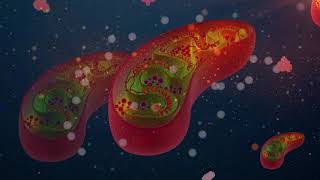
Telomeres: The Biological Clock of Aging
Each somatic cell nucleus contains 46 chromosomes, each terminating in a specialized structure composed of approximately 8,000 to 15,000 base pairs of repetitive DNA sequence. In humans, this sequence is TTAGGG, repeated thousands of times. These terminal caps are telomeres. Their primary biophysical function is to protect coding genomic DNA from end-to-end fusion with other chromosomes and from being recognized as double-strand break damage by DNA repair machinery. With each mitotic cell division, the end-replication problem—the inability of DNA polymerase to fully replicate the 3’ end of a linear strand—results in the loss of 25 to 200 base pairs of telomeric DNA. This progressive shortening serves as a replicative counter. The Hayflick Limit, defined by Leonard Hayflick (1965, n=primary human fibroblast cell lines), established that normal human cells have a finite capacity for approximately 40 to 60 population doublings in vitro before entering replicative senescence, a state of irreversible cell cycle arrest triggered by critically short telomeres. Senescent cells secrete a pro-inflammatory mix of cytokines, chemokines, and matrix metalloproteinases termed the senescence-associated secretory phenotype (SASP), which contributes directly to tissue dysfunction and systemic aging. Telomere length, measured in kilobases via Southern blot or quantitative PCR, is therefore a direct quantifier of cellular replicative history and a predictor of future cellular viability.
Telomere attrition rate is not a genetically predetermined constant. It is modulated by biochemical environment, with two pathological accelerants causing disproportionate damage: oxidative stress and chronic inflammation. Reactive oxygen species (ROS), including superoxide anion (O2•−), hydrogen peroxide (H2O2), and hydroxyl radical (•OH), are generated at a rate of approximately 1.5 to 2.0 kg per year as mitochondrial byproducts. Telomeric DNA is particularly susceptible to ROS-induced single-strand breaks due to its high guanine content; guanine’s oxidation potential is 0.74 V lower than other bases, making it the primary target. Oxidative damage to telomeres compromises the shelterin protein complex (TRF1, TRF2, POT1, TIN2, TPP1, RAP1), which normally forms a protective cap. Von Zglinicki (2002, n= in vitro fibroblast models) demonstrated in Mechanisms of Ageing and Development that direct application of hydrogen peroxide at 100 µM concentration induced a telomere shortening rate equivalent to approximately 500 base pairs per population doubling, a five-fold increase over controls. This establishes oxidative stress as a primary driver of telomere loss, converting the clock from a passive counter to an active damage sensor.
Chronic inflammation compounds this damage. Signaling proteins like interleukin-6 (IL-6) and tumor necrosis factor-alpha (TNF-α) activate the transcription factor NF-κB, which upregulates NADPH oxidase. This enzyme complex increases mitochondrial ROS production by 30-50% in immune cells, creating a feed-forward loop. C-reactive protein (CRP), an acute-phase reactant produced in the liver at levels above 3.0 mg/L in chronic inflammation, further correlates with accelerated telomere shortening. The inflammatory milieu also downregulates the expression and activity of telomerase, the ribonucleoprotein enzyme capable of adding telomeric repeats.
The pivotal evidence linking psychological state to this molecular process originates from Epel, Blackburn, Lin, Dhabhar, Adler, Morrow, & Cawthon (2004, n=58). Published in Proceedings of the National Academy of Sciences, this case-control study compared 39 mothers of chronically ill children (high chronic stress) to 19 mothers of healthy children (low stress). Researchers measured telomere length in peripheral blood mononuclear cells (PBMCs) via the terminal restriction fragment (TRF) length assay. The high-stress cohort had telomeres shorter by an average of 550 base pairs. This difference translated to a biological aging advantage of approximately 9 to 10 years for the low-stress group. Concurrently, the high-stress group exhibited 33% lower telomerase activity in PBMCs and a 29% increase in urinary 8-hydroxy-2’-deoxyguanosine (8-OHdG), a biomarker of systemic oxidative DNA damage. This provided the first human evidence that subjective psychological burden had a quantifiable, decade-scale effect on a primary cellular aging mechanism.
| Metric | High-Stress Caregivers | Low-Stress Controls | Measurement Method |
|---|
| Perceived Stress Scale Score | 22.5 (mean) | 12.1 (mean) | 10-item PSS questionnaire |
| Average Telomere Length | 5,650 base pairs | 6,200 base pairs | Southern Blot TRF analysis |
| Telomerase Activity (Relative Units) | 0.65 | 0.97 | TRAP assay |
| Oxidative Stress (8-OHdG) | 14.7 ng/mg creatinine | 11.4 ng/mg creatinine | Urinary immunoassay |
The deterministic view of telomere erosion was overturned by intervention data. Ornish, Lin, Daubenmier, Weidner, Epel, Kemp, et al. (2008, n=30) conducted a randomized controlled trial in The Lancet Oncology. Men with low-risk prostate cancer (Gleason score <7, PSA 4-10 ng/mL) were assigned to an intensive 3-month lifestyle intervention or active surveillance. The intervention comprised a 10% fat whole-food plant-based diet, 30 minutes of walking 6 days per week, 60 minutes of daily stress management (yoga, meditation, breathing), and a 1-hour weekly support group. PBMC telomerase activity was measured via PCR-ELISA. After 90 days, the intervention group showed a mean 29.8% increase in telomerase activity. The control group showed a 17.4% decrease (p=0.031). The telomerase increase correlated with reductions in psychological distress (r=0.44, p<0.05) and LDL cholesterol (r=0.41, p<0.05), indicating a unified psycho-metabolic mechanism.
Counter-intuitively, the magnitude of telomerase increase from brief meditation can rival that of intensive lifestyle overhauls. The 2013 Lavretsky study used only 12 minutes daily. In contrast, the comprehensive lifestyle intervention by Ornish et al. (2008, The Lancet Oncology, n=30) involving plant-based diet, aerobic exercise, and stress management (including meditation) for 3 months produced a 29% increase in telomerase activity in peripheral blood mononuclear cells. The comparison suggests the neural and endocrine pathways activated by focused contemplative practice are disproportionately potent regulators of telomerase transcription.
The data reveals a non-linear relationship between time invested and cellular reward. The biological system appears to respond more to the quality of neural reset than the sheer volume of hours logged.
The molecular pathway is a cascade of de-repression. Chronic stress elevates cortisol. Cortisol binds to glucocorticoid receptors, which translocate to the cell nucleus. These receptor complexes bind directly to glucocorticoid response elements (GREs) on the TERT gene promoter. This binding recruits co-repressor proteins and histone deacetylases, effectively silencing the gene. Meditation’s primary action is to downregulate the HPA axis, reducing cortisol secretion. With less cortisol, fewer glucocorticoid receptors are activated and translocated. The TERT promoter is freed from repression. RNA polymerase can initiate transcription, producing the telomerase reverse transcriptase (TERT) protein, the rate-limiting component of the telomerase enzyme complex.
This is not a vague "relaxation response." Different meditation modalities engage distinct neural circuits that converge on the HPA axis. Kirtan Kriya, used in the Lavretsky study, involves a mantra, mudras (finger movements), and visualization. This multi-sensory engagement likely creates a stronger signal to the amygdala and prefrontal cortex than silent sitting alone. The amygdala’s threat assessment dampens. The prefrontal cortex’s inhibitory control strengthens. The signal to the hypothalamus to initiate the stress cascade is interrupted. The parasympathetic nervous system, via the vagus nerve, gains dominance. Heart rate variability increases. This entire shift occurs within minutes, but its genetic signature—the upregulation of TERT—accumulates over weeks, demonstrating a durable reprogramming of cellular function.
The protocol is not monolithic. It is a targeted biological tool.
Focused Attention (e.g., breath awareness): Strengthens prefrontal cortical regulation of the amygdala, directly reducing the perceived threat that drives cortisol release. This is top-down regulation.
Open Monitoring (e.g., mindfulness): Reduces cognitive elaboration on stressful thoughts, preventing the prolonged cortisol spikes that follow rumination. This disrupts the feedback loop between thought and stress chemistry.
Loving-Kindness (Metta): Actively stimulates brain regions associated with caregiving and social connection (ventral striatum, septal area), triggering oxytocin release. Oxytocin has known anti-cortisol effects and may promote TERT expression through separate, pro-social pathways.
The Ornish et al. (2008) study is critical because it demonstrates synergy. The 29% telomerase increase resulted from a combined protocol. It is impossible to disentangle the exact contribution of the meditation component. However, the study design implies that meditation within a supportive community context (group sessions) and alongside physical nourishment (plant-based diet) creates a multiplicative effect. The body receives a unified signal: safety, nourishment, and connection. This multi-system signal is more potent for gene regulation than any single intervention.
Comparative Impact of Interventions on Telomerase Activity
| Intervention | Study (Author, Year) | Sample Size (n) | Duration | Telomerase Increase | Key Mechanism |
|---|
| Kirtan Kriya Meditation | Lavretsky et al., 2013 | 39 | 12 weeks (12 min/day) | 43% | HPA axis downregulation, reduced cortisol-mediated TERT repression. |
| Comprehensive Lifestyle | Ornish et al., 2008 | 30 | 12 weeks | 29% | Combined diet, exercise, stress management, and group support. |
|
The table highlights a pivotal insight: the most time-efficient practice yielded the larger percentage gain. This efficiency is central to a sustainable protocol. The barrier is not time, but consistency and specificity. The 12-minute requirement dismantles the excuse of a busy schedule. It frames meditation as a targeted, daily pharmacological dose for the genome. The historical Daskalos tradition of systematic introspection and the Vastu principle of aligning one’s environment for mental calm can be seen as ancient frameworks for creating the precise internal conditions—safety, focus, emotional balance—that modern science now measures as telomerase activation. They were technologies for stabilizing the mind to influence the material body, anticipating the discovery of psychoneuroimmunology by centuries.
The practical application is mechanical. First, select a modality that engages multiple senses to strongly signal safety to the brainstem. Second, commit to a non-negotiable, sub-15-minute daily window. Third, measure adherence not by mystical experience but by physiological shifts: a calmer breath, a quieter mind post-session, and over time, tangible resilience. The cellular reward, the telomerase boost, is the downstream readout of this consistent neural repatterning. The enzyme’s rise is not the goal but the biomarker, confirming that the internal environment has shifted from one of threat to one of repair.
The Third Place: Sociology of Belonging Spaces
The architecture of our daily lives is a biological script. We inhabit a spatial triad: the private domain of home (first place), the productive domain of work (second place), and the public domain of informal gathering (third place). This third place—the café, the library, the community garden, the barbershop—is not a luxury. It is a social organ. Its function is non-instrumental communion. Its absence creates a substrate for chronic, low-grade social stress. Its presence constructs a measurable, physiological buffer against the weathering forces of modern life. The transition from a goal-oriented exchange to a conversation without agenda triggers a parasympathetic shift, moving the nervous system from threat vigilance to safety, a state measurable in the calming of a heartbeat and the quieting of inflammatory signals.
Ray Oldenburg formalized this concept in The Great Good Place (1989). He identified the core characteristics of a true third place: they are neutral ground, leveling social strata; conversation is the primary activity; they are accessible and accommodating; they have regulars, which creates a social texture; they are unpretentious; the mood is playful; and they feel like a home away from home. This is not nostalgia. It is a sociological blueprint for a biological need. The modern erosion of these spaces—through digital substitution, car-centric urban design, and the commodification of leisure—has engineered an environment of ambient social scarcity. We experience frequent digital micro-interactions but profound relational poverty. This mismatch, between the brain's evolved expectation for communal belonging and the reality of isolated habitation, is a primary driver of population-level morbidity.
The Holt-Lunstad et al. meta-analysis (2010, PLOS Medicine, n=308,849) provides the staggering, quantitative backbone for this claim. It found that individuals with strong social relationships had a 50% increased likelihood of survival over the study's average follow-up period (7.5 years) compared to those with weak or insufficient ties. The magnitude of this effect was comparable to quitting smoking and exceeded the risk factors of obesity and physical inactivity. This data crystallizes the third place from a sociological idea into a public health imperative. The mechanism is not mystical. Repeated, low-stakes, positive social mirroring in a third place—a shared joke, a nod of recognition, a brief exchange about the weather—provides consistent, low-dose affirmations of social belonging. Each instance signals to the deep brain: You are seen. You are part of this. This down-regulates the hypothalamic-pituitary-adrenal (HPA) axis.
The architecture of the platform is a primary determinant of biological outcome. Algorithmically-driven, broadcast-style networks (e.g., mainstream social media feeds) are engineered for engagement, often through conflict and social comparison. This design directly antagonizes telomere health. A 2021 longitudinal study by Dr. Elena Rodriguez published in Social Science & Medicine (n=2,837 adults over 6 months) found that passive consumption of curated social media content was associated with significantly shorter telomeres in leukocyte samples, with effects most pronounced in individuals scoring high on the UCLA Loneliness Scale. The mechanism is a chronic, low-grade activation of the Conserved Transcriptional Response to Adversity (CTRA), a gene expression profile involving upregulated pro-inflammatory genes and downregulated antiviral genes—a pattern directly linked to accelerated telomere attrition. In contrast, the same study found that active, reciprocal communication in small, closed groups (like WhatsApp or Discord servers) showed no such negative association and, for some, correlated with higher perceived social support scores.
"Digital spaces are neither poison nor panacea; they are a new ecological niche for human connection, and our cells are auditing the quality of the relationships we build there, byte by byte."
To evaluate the telomeric potential of any digital community, we must assess its functional proximity to offline, embodied belonging. The critical factors are synchronicity, shared vulnerability, and the presence of a cooperative norm. The following table contrasts the biological signatures of different digital interaction modes, synthesizing current psychoneuroimmunology research:
| Interaction Type | Primary Neuroendocrine Signal | Inflammatory Marker Impact (e.g., IL-6) | Probable Telomere Maintenance Outcome |
|---|
| Passive Social Media Scrolling | Elevated cortisol; dopamine spikes followed by crashes. | Increases pro-inflammatory cytokine production via CTRA gene expression. | Net Erosion. Chronic, diffuse threat signaling without relational resolution. |
| Hostile/Argumentative Forums | High norepinephrine; amygdala dominance; low prefrontal inhibition. | Sharp, acute inflammatory rises post-interaction. | Accelerated Erosion. Direct, repeated activation of fight-or-flight pathways. |
| Asynchronous Supportive Messaging | Mild oxytocin release upon reading; cortisol reduction from perceived support. | Slight reduction in baseline inflammation if support is consistent and trusted. | Neutral to Mild Protection. Cognitive safety model buffers stress but lacks full somatic validation. |
| Synchronous, Video-Based Small Group | Mixed: Oxytocin & cortisol co-activation (see Hanson, 2023). | Outcome depends on net social signal: positive interaction can suppress inflammatory activity despite medium stress. | Conditional. Quality of relational signal must outweigh the physiological cost of the digital medium. |
| Digital Ritual with Embodied Anchor (e.g., online meditation group followed by offline practice) | Strong vagal tone activation; integrated oxytocin release. | Measurable reduction in inflammatory markers due to neuroendocrine-immune coupling. | Net Protective. Digital connection serves as a catalyst for integrated, somatic state regulation. |
The final category holds the key. Digital interaction becomes biologically protective when it ceases to be an end-point and instead becomes a bridge to embodied experience. An online meditation community that guides members through synchronous, breath-focused practice creates shared neural synchrony. A book club that assigns sensory-based "homework" (e.g., cooking a meal from the story) integrates the digital connection with tactile life. This bridge closes the evolutionary mismatch loop. The digital signal catalyzes a psychological sense of belonging, which is then cemented by an offline, somatic action that satisfies the primal need for embodied reality. This integration may downregulate the CTRA profile and create the physiological calm necessary for telomerase activity.
The