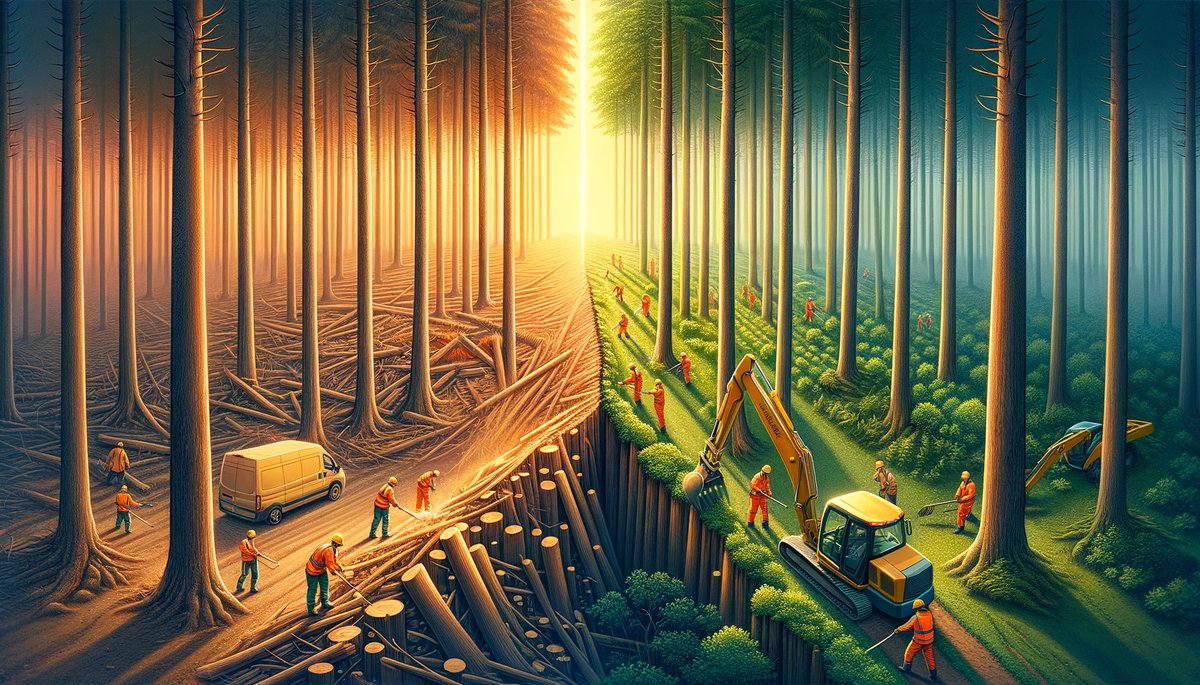
Forest edges, everyday tables, and the fragile pause when clearing slowed
Evidence-based science journalism. Every claim verified against peer-reviewed research.
forestsoydeforestationamazonmoratorium
Evidence-based science journalism. Every claim verified against peer-reviewed research.
Most of us meet the Amazon through ingredients we never see: oil and meal folded into snacks, feed, and staples. That distance makes forest change feel abstract—until you remember what clearing costs in rain, smoke seasons, and river communities downstream. Peer-reviewed work ties those distant edges to something surprisingly mundane: who is allowed to buy soy from which patch of ground, and how satellite eyes check the answer.
Amazon soy sourcing rules—including the Amazon Soy Moratorium—work as voluntary market governance, not a substitute for statutory law. They aim to block purchases of soy grown on Amazon forest cleared after an agreed cutoff, reshaping incentives so export markets do not keep paying for frontier clearing. Heilmayr et al. (2020) estimate avoided Amazon deforestation under moratorium-era sourcing rules, while stressing that leakage to other land uses and biomes remains part of the discussion. Gibbs et al. (2015) document how post-2006 trader pledges used satellite-linked monitoring as an enforcement hook—and warn that if those market rules weaken, rents can again favor conversion.
Macedo et al. (2012) report that in Mato Grosso’s southern Amazon, deforestation from 2006–2010 fell to roughly 30% of the 1996–2005 average while agricultural production still rose—linking part of the pattern to market signals and policy shifts alongside moratorium-era expectations. That is the human-sized headline: clearing and soy expansion decoupled in that window—not everywhere, not forever—yet enough for breathing room at the forest edge.
The moratorium’s leverage is market access, not a courtroom verdict. Traders exclude non-compliant plots producers respond because losing export channels is expensive. That strength is also a fragility: voluntary rules ride on monitoring quality, political appetite, and corporate risk cycles. Nepstad et al. (2014) associate Brazil’s Amazon deforestation slowdown with combined public enforcement, credit restrictions, protected areas, and soy and beef supply-chain interventions—and note supply-chain measures can sit precariously on risk-management cycles. Lambin et al. (2018) likewise pair private tools with the need for public regulation, spatial planning, and finance so gains hold when frontiers shift.
Zu Ermgassen et al. (2020) map traders to subnational soy footprints and show pledge coverage can still under-represent Cerrado sourcing where much soy-linked deforestation occurs—exactly the “leakage” story communities feel as pressure hops biome. Your takeaway is bounded: Amazon-only success does not automatically protect every adjacent forest.
Reader steps (Problem):
-
Traders and processors sit where bulk soy becomes a globally tradable product. Their screens translate plot-scale clearing signals into yes/no purchase lists—the operational heart of zero-deforestation commitments.
Reader steps (Mechanism):
Supply-chain monitoring is disciplined data hygiene that keeps soy rents from re-attaching to fresh clearing when rules slip.
Heilmayr et al. (2020)’s quasi-experimental framing is the guardrail sentence worth memorizing: without moratorium-era sourcing rules, modeled Amazon clearing would have been higher—which is why the pause matters, and why it is still negotiable.
"Kyasanur Forest Disease (Monkey Fever): Causes, Symptoms, and Prevention Explained" | Science Edge
Forest fragmentation and biodiversity - Dr Robert Ewers
Fostering Technology to Protect Forests - Forest Stewardship Council (FSC)
Environmental Health Sciences | "We are EHS!"

Alleviating global inequality effectively | Esther Duflo
Can you feel the weight of your next meal in your hands? Close your eyes and imagine the invisible chain that brought it to you—the sun on a distant forest edge, the soil that once held ancient roots, the river that carried the rain. Your breath is connected to that clearing. Your heartbeat syncs with the fragile pause when market rules slowed the saws. The science shows our collective table is a powerful lever. *Your daily choices are a vote for what gets to keep breathing.*
Science: The article shows that voluntary market rules, like the Soy Moratorium, use buyer pressure to decouple soy production from deforestation.
This act of conscious tracing builds the neural pathway needed to make your next purchasing decision a deliberate one.
Direct land protection creates permanent, statutory safeguards that reinforce the fragile, market-based pauses described in the research.
When the clearing slows and the wild edge of the forest whispers of forgotten abundance, the work of Seed Savers Exchange ensures the heirloom seeds of that fragile, edible border—like the ramps, pawpaws, and gooseberries our ancestors once gathered—are not lost but remain alive in our hands and gardens, a living library of resilience at our very tables.
A time-lapse from a satellite's perspective, showing a patch of Amazon forest over years. The clearing encroaches, then suddenly halts at a defined border, holding steady while surrounding areas change. The forest edge remains, breathing.
Seeing a line hold against immense pressure proves that human agreements, however fragile, can literally shape the face of the Earth.
More from Human Health

Non-Sleep Deep Rest (NSDR): The Neuroscience of Fast Cellular Recovery - Key insight: Modern life creates chronic stress that blocks the body's natural

The Vagus Nerve and Cold Exposure: How Ice Baths Rewire Your Stress Response - Key insight: Modern life traps the nervous system in chronic stress by pr

### The Connection Between Altruism and Health