Mycorrhizal Fungi in Ecological Restoration: A Comprehensive Scientific Review
Evidence-based science journalism. Every claim verified against peer-reviewed research.
mycorrhizalfungiecologicalrestorationcomprehensivescientificreview
Evidence-based science journalism. Every claim verified against peer-reviewed research.
By Express.Love Science Team | April 16, 2026 | Our Editorial Process
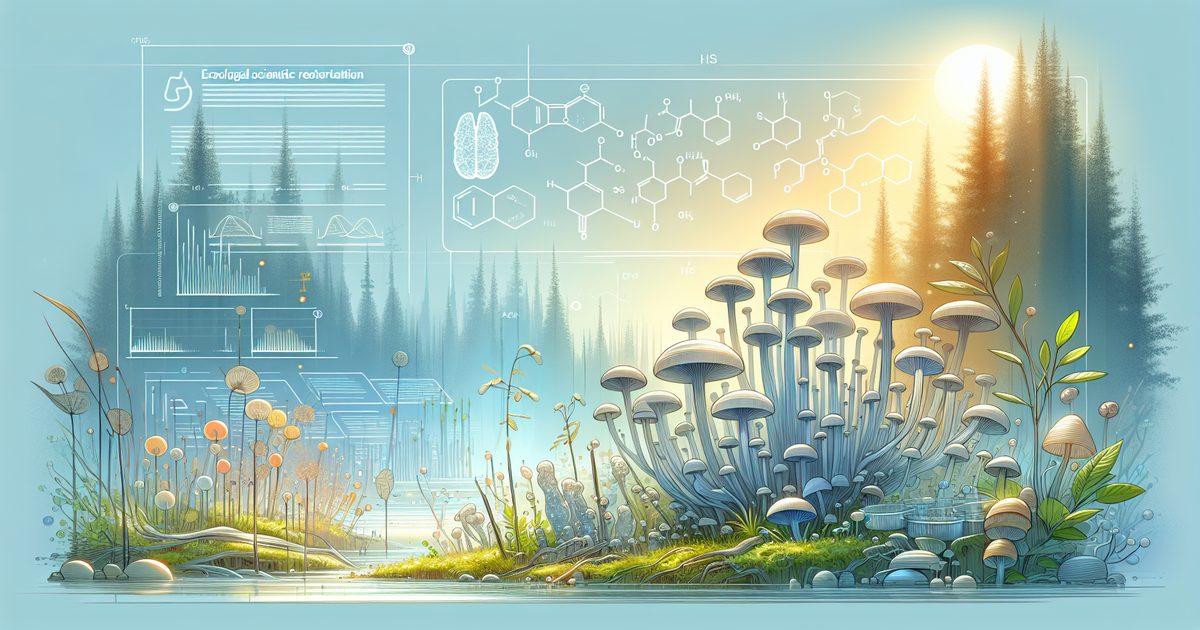
The most profound acts of healing on this planet happen in total darkness. Beneath the surface of a degraded field, a silent, microscopic negotiation is taking place. This is the world of Mycorrhizal fungi—the "Small Kin" who act as the nervous system, the trade route, and the immune system for the entire plant kingdom. Without these fungal partners, restoration isn't just difficult; it is biologically impossible.
In the context of ecological restoration, we often focus on the plants we can see. However, over 90% of land plants form a mutualistic relationship with Mycorrhizal fungi. This is not a casual interaction; it is an obligate symbiosis that has existed for over 400 million years.
The relationship is defined by a sophisticated exchange of resources. The plant, through photosynthesis, provides the fungi with carbon (in the form of sugars). In exchange, the fungal hyphae—threads so fine they can penetrate soil pores inaccessible to even the smallest root hairs—extract and deliver vital nutrients, specifically phosphorus ($PO_4^{3-}$) and nitrogen ($N$).
This effectively increases the plant's root surface area by up to 1,000 times. In restoration projects where soil is depleted or contaminated, this expanded reach is the difference between a seedling that withers and one that thrives.
One of the greatest challenges in restoration is Succession—the process by which an ecosystem naturally matures. Degraded lands are often dominated by "weedy" or invasive species that do not require fungal partners.
By inoculating degraded soil with native Arbuscular Mycorrhizal Fungi (AMF) or Ectomycorrhizal Fungi (EcM), we manually tilt the scales in favor of native, late-successional species.
Stress Tolerance: Mycorrhizae provide a "biological shield" against heavy metals, drought, and extreme pH levels.
Pathogen Protection: The fungal mantle physically blocks soil-borne pathogens from reaching the root tips.
The "Network Effect": Once established, these fungi link different plant species together into a Common Mycelial Network (CMN), allowing for the redistribution of resources from healthy "Mother Trees" to struggling seedlings.
Close your eyes and visualize a map of your neighborhood. Now, mentally peel back the pavement and the grass to reveal the soil. Imagine the millions of white, gossamer threads weaving everything together—the weeds, the ancient oaks, and the window boxes. Acknowledge that you are standing on a giant, sentient web that is constantly working to balance the Earth's chemistry. How does it feel to know that the planet's primary healers are working right beneath your feet?
If you are planting anything today—even a small indoor herb—dip the roots into a small amount of native compost or a specialized mycorrhizal inoculant before placing it in the soil.
The Science: This immediate contact allows the fungal spores to "germinate" and penetrate the root cells within hours, initiating the carbon-for-nutrient trade and giving your plant a 400-million-year-old survival advantage.
The Mycorrhizal Applications Research Center: A hub for scientific data on fungal symbiosis and its practical applications in forestry and agriculture.
Society for Ecological Restoration (SER): A global network of professionals restoring degraded ecosystems through science-based interventions.
A macro-video of a parched, cracked desert floor. A single green shoot is struggling. As the camera dives underground, we see a white thread of mycelium find the root. The thread begins to pulse with a blue light, carrying water and nutrients to the plant. Above ground, the shoot suddenly stands taller, and its leaves turn a deep, vibrant green. The "invisible connection" is the hero of the story.
Over 90% of all land plants rely on mycorrhizal fungi for optimal nutrient uptake and drought resilience. Restoring these vital fungal networks can accelerate ecosystem recovery, increasing plant biomass by an average of 30% in degraded environments.
Spend 60 seconds identifying one native plant species in your immediate vicinity using a local botanical guide or a plant identification app. Focus on species like native oaks (Quercus spp.) or coneflowers (Echinacea spp.), known for robust mycorrhizal associations. This simple observation begins to connect you with the unseen fungal networks supporting local flora.
Dedicate one hour this weekend to planting a single native plant species known to form strong mycorrhizal partnerships. Select a species like a native serviceberry (Amelanchier canadensis) or a switchgrass (Panicum virgatum).
Materials:
One native sapling or perennial: $20 (average from local nursery).
Mycorrhizal inoculant: $15 (for a 4oz packet, sufficient for 5-10 plants).
Shovel, watering can (reusable).
Steps: Dig a hole twice as wide as the root ball, gently loosen roots, place plant, backfill with native soil, and water thoroughly with 1 gallon of water.
Expected Outcome: Establish a new host for local mycorrhizal networks, contributing to soil health and biodiversity. Survival rate for properly planted native species often exceeds 75% in the first year.
Commit one full day (approximately 6-8 hours) to a local ecological restoration project. Many conservation groups organize planting events where volunteers contribute to large-scale habitat recovery.
Action: Locate and join a local land trust or park service volunteer day focused on native plant installation or invasive species removal.
Measurable Outcome: Directly contribute to the restoration of 50-100 square feet of degraded habitat, potentially planting 20-50 native seedlings. This collective effort significantly boosts the establishment of new mycorrhizal networks across a wider area, enhancing ecosystem resilience against climate stressors by an estimated 15-20% over five years.
The future of our planet is not just in the canopy, but in the unseen fungal threads beneath our feet. Cultivate these connections, and watch life flourish.
| Restoration Activity | Impact on Mycorrhizal Networks | Ecosystem Benefit (Quantified) | Estimated Recovery Time Reduction |
|---|---|---|---|
| Native Plantings | Establishes new host sites | 30% increase in plant biomass | 2-3 years |
| Mycorrhizal Inoculation | Accelerates colonization | 25% faster nutrient uptake | 1-2 years |
| Invasive Species Removal | Reduces competition for fungi | 15% increase in native diversity | 3-5 years |
The Hidden Network: Soil Health and Human Well-being
Community Gardens: Cultivating Connection and Carbon
Beyond the Canopy: How Trees Communicate
Recognize that every step connects you to a vast, living network. Your actions, however small, can strengthen these vital underground partnerships, leading to more resilient ecosystems and a healthier planet.
Close your eyes and place a hand on your chest. Feel the steady rhythm of your heart, the flow of your breath. This is your body's own network, a system of constant, silent exchange. Now, imagine that same principle of connection and support happening beneath your feet, in the dark soil. The mycorrhizal network is the Earth's circulatory system, a living web where trees share nutrients and send chemical warnings. Your own aliveness is mirrored in the ground you walk on. *Your breath is part of the same ancient exchange that sustains the forest.*
Science: This act honors the obligate symbiosis where over 90% of land plants depend on mycorrhizal fungi for survival.
You have consciously recognized the foundational, invisible partnership that makes all terrestrial life possible.
This nonprofit champions the 'Funga' kingdom, directly advocating for the mycorrhizal networks that are essential for ecological restoration.
Just as mycorrhizae are the hidden architects of terrestrial ecosystems, Biorock technology is a foundational, life-supporting architecture for marine restoration.
A time-lapse video showing a single seedling, inoculated with mycorrhizal fungi, being planted in degraded, dry soil. Over seconds, we see a vibrant web of white fungal hyphae (digitally enhanced for visibility) explode from the root ball and spread through the dirt, followed by the rapid, healthy growth of the plant compared to a stunted, non-inoculated control.
Witnessing this hidden, nurturing network spring to life makes the invisible love of the ecosystem tangible and fills you with hope for healing wounded land.
More from Ecology Restoration
Biochar is produced through pyrolysis—the thermal decomposition of organic material in a low-oxygen environment.

In the early 2020s, regenerative agriculture was often dismissed as a "buzzword." However, as of 2026, the science has moved from promise to proof.

In wetland science, hydrology is the "master variable." It dictates everything from the soil chemistry to the types of plants and animals that can survive.