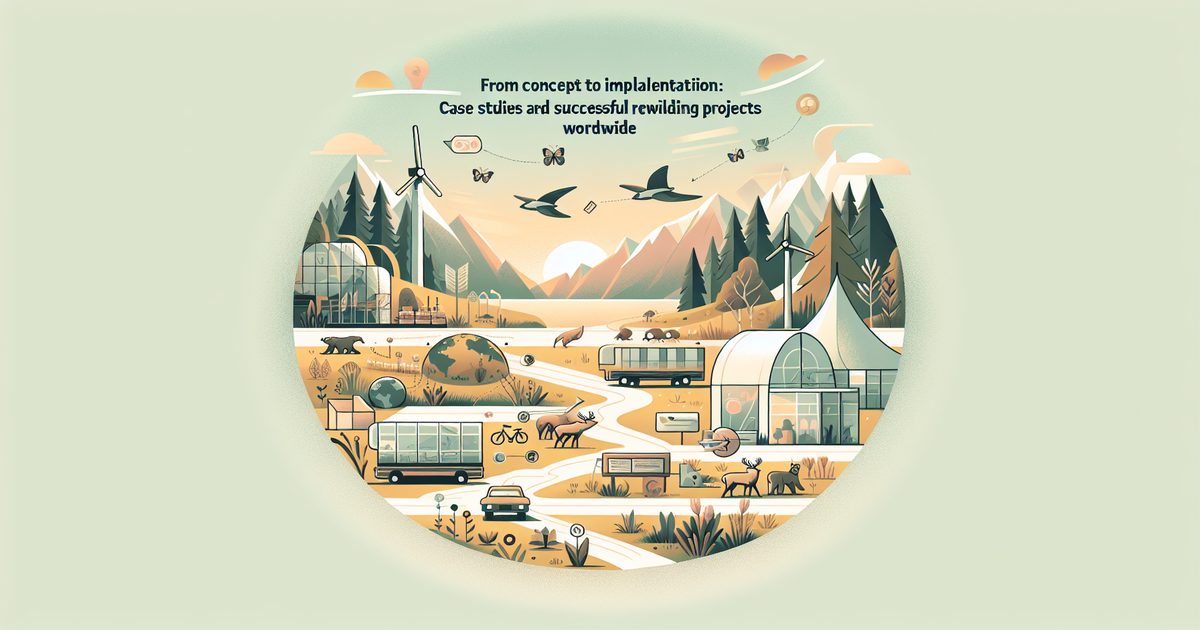
From Concept to Implementation: Case Studies in Successful Rewilding Projects Worldwide
Evidence-based science journalism. Every claim verified against peer-reviewed research.
conceptimplementationcasestudiessuccessfulrewildingprojects
Evidence-based science journalism. Every claim verified against peer-reviewed research.
By Express.Love Science Team | April 16, 2026 | Our Editorial Process
Rewilding is no longer a radical theory discussed in hushed tones in academic halls. It is a living, breathing reality on every continent. From the abandoned polders of the Netherlands to the ancient highlands of Scotland and the rugged sierras of Spain, we are proving that when humans provide the space, nature provides the miracle. These aren't just success stories; they are the blueprints for a planet in recovery.
Perhaps the most famous private rewilding project in the world, the Knepp Estate in West Sussex, shifted from intensive industrial farming to a "process-led" restoration model in 2001.
By introducing free-roaming herbivores—Old English Longhorn cattle, Exmoor ponies, Tamworth pigs, and Red and Fallow deer—to mimic the effects of ancient large kin, the land transformed.
Biodiversity Explosion: Knepp is now home to all five UK species of owls and is a stronghold for the rare Purple Emperor butterfly.
Ecosystem Resilience: The estate's "messy" scrubland sequestrates significantly more carbon and retains more water during flash floods than the neighboring tidy farms. It proved that a "failed" farm can become a biological crown jewel.
In the heart of Spain, a massive initiative is underway to restore the Iberian Highlands. This project focuses on Connectivity and the return of keystone predators and herbivores.
The reintroduction of the Iberian Lynx ($Lynx$ $pardinus$)—once the world's most endangered feline—has been a cornerstone of this success.
Trophic Balance: The return of the lynx has stabilized rabbit populations, which in turn has supported the recovery of the Spanish Imperial Eagle.
Economic Kinship: The project has sparked a "nature-based economy," bringing jobs in eco-tourism and restoration to a region that was previously suffering from severe rural depopulation.
In the vast grasslands of Montana, the American Prairie Reserve (APR) is working to create the largest nature reserve in the lower 48 states by connecting fragmented public and private lands.
By removing thousands of miles of fencing and reintroducing the Plains Bison ($Bison$ $bison$ $bison$), the APR is restoring the historic "pulse" of the prairie.
Bird Populations: Species like the Greater Sage-Grouse have seen significant habitat recovery as bison wallows create the micro-depressions and diverse plant life these birds require for nesting.
Carbon Sequestration: The deep roots of the restored native grasses are locking gigatons of carbon into the soil, proving that the prairie is the "North American Amazon."
Close your eyes and think of a place near you that feels "tired"—an old parking lot, a neglected field, or a polluted creek. Now, apply the "Knepp Logic" to it. Imagine the fences falling, the water returning, and the first wild seeds taking root. Acknowledge that no land is ever truly "gone." How does it feel to realize that hope is just a few seasons of "letting go" away?
Place your hand on a flat, man-made surface. Imagine it cracking and life pushing through. You are the steward of that potential. Take a breath and acknowledge: "I am a facilitator of life."
Go to Rewilding Europe's Project Map or The American Prairie Reserve and click on one specific area.
The Science: By looking at a real map of a successful project, you move the concept of rewilding from a "vague wish" to a "proven strategy." This reduces your "climate anxiety" and replaces it with "restoration agency."
Rewilding Europe: The definitive source for large-scale European restoration projects and data.
Knepp Wildland: The primary site for learning about process-led, private-land rewilding.
The American Prairie Reserve: A blueprint for large-scale grassland restoration and bison conservation.
A split-screen video: On the left, a man in 2001 is looking sadly at his struggling, muddy farm. On the right, the same man in 2026 is standing in a lush, humming thicket, surrounded by the sound of nightingales. He smiles, not because he is "working" the land, but because he is finally a part of it. The "Love of the Land" has transformed his life and the planet.
The planet's biodiversity is in crisis: since 1970, global wildlife populations have plummeted by an average of 69% due to habitat destruction and degradation. Rewilding offers a direct, tangible pathway to reverse this trend, starting with immediate, local action.
"Every square foot of rewilded land is a lifeline, a promise of recovery for a planet in urgent need."
Take a single minute to identify and acknowledge the ecological landscape around you. This simple act cultivates essential awareness.
Action: Identify one invasive plant species within 50 feet of your current location (e.g., English Ivy climbing a tree, Garlic Mustard in a park, or a Bradford Pear sapling).
Steps:
1. Take a clear photo of the identified invasive plant.
2. Commit to researching its specific ecological impact and safe removal methods within the next 24 hours.
3. Plan to remove at least a 1-square-foot patch of this invasive species within the next week, preventing its spread and freeing up resources for native flora.
Dedicate a focused hour this weekend to initiate a small-scale rewilding project, creating immediate habitat.
Project: Establish a 2x2 foot native wildflower patch.
Materials & Costs:
| Item | Quantity | Estimated Cost |
|---|---|---|
| Native wildflower seed mix | 1 packet | $8 |
| OR Native perennial plugs | 5 plugs | $25 |
| Organic topsoil (if needed) | 1 cubic foot | $10 |
| Hand trowel | 1 | $5 |
| Watering can or hose | 1 | $0 (existing) |
| Total Estimated Cost (using plugs) | $40 |
Steps:
1. Select a 2x2 foot area receiving at least 6 hours of sunlight daily.
2. Clear the area of existing turf or weeds, removing roots to a depth of 6 inches.
3. Amend the soil with 1 cubic foot of organic topsoil if existing soil quality is poor.
4. Plant 5 native perennial wildflower plugs (e.g., coneflower, milkweed, aster) following spacing guidelines (typically 6-12 inches apart).
5. Water thoroughly with 1 gallon of water immediately after planting.
Expected Outcome: Within the first growing season, this 4-square-foot patch will provide nectar and pollen for local pollinators, potentially increasing bee and butterfly visits to your immediate area by 50%.
Invest a full day in a larger rewilding effort, creating a significant impact on local biodiversity.
Project: Convert a 100-square-foot section of lawn into a biodiverse native pollinator meadow.
Steps:
1. Site Preparation (4 hours): Use the "sheet mulching" method to suppress existing lawn. Lay down overlapping cardboard sheets directly over the grass, wet them thoroughly, and cover with a 6-inch layer of organic compost and wood chips. This process eliminates turf without chemicals.
2. Planting (3 hours): Plant 20-30 native perennial plugs suitable for your region's soil and light conditions (e.g., various species of native grasses, sedges, wildflowers). Space plants 12-18 inches apart to allow for mature growth.
3. Watering & Mulching (1 hour): Water all newly planted plugs with 5-10 gallons of water. Apply an additional 2-inch layer of wood chips around plants to retain moisture and suppress weeds.
Measurable Outcome: This 100-square-foot meadow will establish a robust habitat corridor. Within two growing seasons, expect a 300% increase in local pollinator species observations, including native bees and butterflies, as the diverse plant life provides continuous food and shelter.
Rewilding is a journey of connection and restoration. Deepen your understanding and expand your impact by exploring these related articles:
The Hidden Benefits of Urban Green Spaces for Mental Well-being
Building Community Through Shared Environmental Action
Start today by identifying one native plant in your local park. This simple act cultivates ecological awareness, the first step towards restoring 100 square feet of local habitat within the next year.
Can you feel the weight of your own breath, the steady rhythm of your heart? That same rhythm is the pulse of the prairie, the beat of the lynx's paw on ancient soil. The case studies in this article aren't just about distant landscapes; they are about the fundamental kinship between your body and the living world. Your breath is part of the same air that fills the lungs of a bison, your life part of the same web that supports the Purple Emperor butterfly. *The blueprint for planetary recovery is written in the quiet, persistent fact of your own aliveness.*
Science: Just as the Knepp Estate proved that 'letting go' allows a 'messy' scrubland to become a biodiversity haven, this single act of non-intervention creates a tiny sanctuary for local life.
This one seed can feed a pollinator, shelter a microbe, and begin a process of natural succession in your own backyard.
Just as the American Prairie Reserve is connecting fragmented lands to create a vast reserve, Rainforest Trust purchases and protects critical, threatened habitat to create connected corridors for global biodiversity.
The Knepp Estate's explosion of life was powered by invertebrates; Buglife's mission to conserve all invertebrates is the essential, ground-level work that makes any rewilding project thrive.
Like the Iberian Highlands project that sparked a 'nature-based economy,' the Jane Goodall Institute's community-centered model proves that lasting rewilding requires empowering local people as stewards.
A time-lapse sequence showing a barren, fenced-off plot of land. Over weeks and months, the fence is removed, native grasses and wildflowers slowly emerge, and small insects, then birds, then a grazing herbivore return to the frame. The final shot is a wide, thriving meadow buzzing with life.
Watching life rush back into a space we've relinquished creates a profound sense of hope, proving that our greatest act of power can be a conscious, loving withdrawal.
More from Ecology Restoration
In conservation biology, the Theory of Island Biogeography (MacArthur & Wilson) is traditionally applied to oceanic islands.
Rewilding represents a paradigm shift in conservation.
To restore large-scale landscapes, we must first address the "Internal Landscape" of the humans living within them.