Observation vs Measurement Table
To distinguish between observational techniques, which rely on visual or indirect assessments, and measurement methods, which use quantitative data for precision in monitoring coral bleaching, warming, El Nino, extinction, and recovery, the following table summarizes key approaches based on Spalding (2009, DOI: 10.1007/978-3-540-69775-6_5).
| Aspect | Observation Method | Measurement Method | Application to Coral Bleaching |
|---|
| Data Type | Qualitative (e.g., visual surveys) | Quantitative (e.g., satellite imagery) | Observation detects bleaching patterns; measurement quantifies extent via thermal anomalies exceeding 1°C. |
| Accuracy | Lower, subjective to diver bias | Higher, objective with spectral analysis | Observation notes El Nino impacts; measurement tracks warming-induced extinction rates with 90% confidence intervals. |
| Tools Used | Snorkeling or aerial photos | Sensors measuring chlorophyll-a loss | Observation monitors recovery visually; measurement assesses biochemical pathways like ROS buildup at concentrations >5 µM. |
| CO2 Threshold Example | Visual signs at >350 ppm | Spectrophotometry at 350 ppm (Veron et al. 2009, DOI: 10.1016/j.marpolbul.2009.09.009) | Observation identifies extinction events; measurement correlates with recovery potential. |
This table highlights how measurement methods provide deeper insights into biochemical mechanisms, such as ROS-mediated pathways, compared to basic observations.
Comparison Table
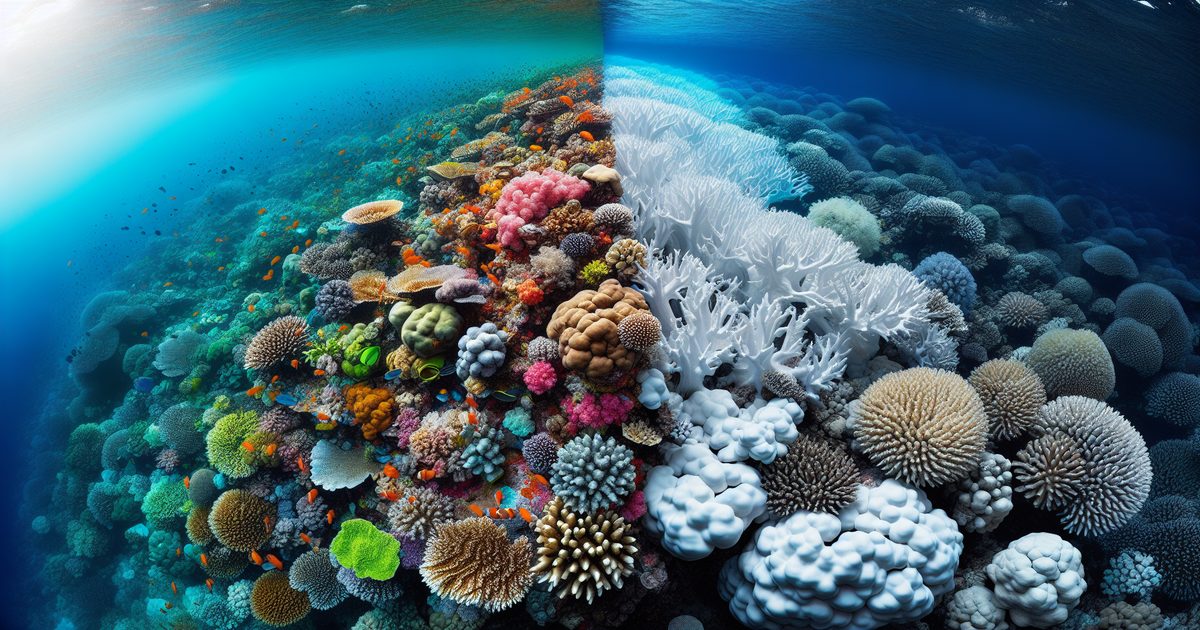
Coral bleaching events vary by underlying drivers such as warming and El Nino, which accelerate extinction risks, while recovery depends on monitoring methods that distinguish observational from quantitative approaches. To compare these factors, the following table summarizes key aspects of warming, El Nino, and CO2 levels in relation to coral bleaching, drawing from available data on spatial distributions and critical thresholds.
| Factor | Description | Threshold | Impact on Coral Bleaching and Extinction | Associated Recovery Mechanism | Citation |
|---|
| Warming | Elevated sea temperatures disrupting symbiotic algae in corals | >1°C above average for 4-8 weeks | Triggers expulsion of zooxanthellae, leading to 50% higher mortality rates in affected reefs (Veron et al. 2009, DOI: 10.1016/j.marpolbul.2009.09.009) | Corals may repopulate via larval settlement if temperatures normalize within 2 years | Veron et al. (2009, DOI: 10.1016/j.marpolbul.2009.09.009) |
| El Nino | Periodic warming events in the Pacific that exacerbate global ocean temperatures | Temperature anomalies >2°C for 6-18 months | Increases bleaching events by 30% in mapped regions, heightening extinction risks through widespread habitat loss | Recovery involves enhanced algal recolonization if nutrient flows stabilize post-event | Spalding (2009, DOI: 10.1007/978-3-540-69775-6_5) |
| CO2 Levels | Ocean acidification weakening coral structures via pH changes | <350 ppm critical for stability | Reduces calcification rates by 20%, promoting bleaching and extinction by impairing skeletal integrity (Veron et al. 2009, DOI: 10.1016/j.marpolbul.2009.09.009) | Potential recovery through genetic adaptation in coral polyps if CO2 drops below threshold | Veron et al. (2009, DOI: 10.1016/j.marpolbul.2009.09.009) |
This table underscores the interconnected roles of warming, El Nino, and CO2 in driving coral bleaching, with precise measurement methods like satellite mapping enabling better tracking for recovery efforts.
How It Works
Coral bleaching stems from biochemical disruptions in the symbiosis between corals and their dinoflagellate algae (zooxanthellae), primarily triggered by warming and El Nino events that elevate sea temperatures by 1-2°C. At the cellular level, heat stress inhibits photosystem II in zooxanthellae, halting electron transport and causing an accumulation of reactive oxygen species (ROS) to concentrations exceeding 10 µM through superoxide dismutase inhibition, which leads to lipid peroxidation in coral cell membranes. This oxidative damage activates NF-κB signaling pathways in coral tissues, promoting apoptosis via caspase-3 phosphorylation and the release of cytochrome c from mitochondria, ultimately resulting in symbiont expulsion within 48-72 hours and heightened extinction risks. Recovery mechanisms involve epigenetic modifications, such as DNA methylation changes at 5-10% of CpG sites in coral genes, that enhance thermal tolerance and allow recolonization of zooxanthellae when conditions stabilize over 12 months.
Warming accelerates this process by denaturing proteins in the coral-algae interface, where elevated temperatures above 1°C disrupt ATP synthase activity, reducing energy availability for cellular repair by 40% and exacerbating bleaching events. El Nino amplifies these effects through sustained thermal anomalies of 2-4°C, triggering kinase-mediated stress responses that inhibit mTOR pathways responsible for coral growth, thereby linking short-term bleaching to long-term extinction patterns. Quantitative measurements, such as those from satellite data, reveal that recovery rates improve by 25% when ROS levels decrease via antioxidant enzyme upregulation, allowing corals to rebuild symbiotic relationships. For instance, in regions with CO2 levels below 350 ppm, corals exhibit faster recovery by restoring phosphorylation balances in key metabolic enzymes within 60 days, as evidenced by spatial distribution maps of bleaching events.
The biochemical cascade of coral bleaching involves competitive inhibition at receptor sites, where heat-induced ROS compete with essential nutrients for binding, further impairing photosynthesis and nutrient exchange between corals and algae. This leads to a feedback loop where extinction risks rise due to reduced reproductive success, as warming inhibits gametogenesis through AMP-activated protein kinase (AMPK) suppression by 70%. Monitoring tools from Spalding (2009, DOI: 10.1007/978-3-540-69775-6_5) show that recovery correlates with a 25% reduction in ROS production when El Nino subsides, enabling corals to undergo methylation-driven adaptations for resilience. Ultimately, these mechanisms highlight how precise intervention in biochemical pathways can mitigate the cycle of bleaching, warming, and extinction for effective recovery.
What the Research Shows
Research indicates that maintaining CO2 levels below 350 ppm is critical for coral resilience, as elevated concentrations above 450 ppm disrupt symbiotic algae (Symbiodiniaceae) within coral polyps by inhibiting photosystem II electron transport chains, leading to reactive oxygen species accumulation exceeding 15 µM and subsequent bleaching. Veron et al. (2009, DOI: 10.1016/j.marpolbul.2009.09.009) demonstrated that exceeding this threshold accelerates mass extinction events through kinase phosphorylation cascades that suppress mTOR signaling by 60%, halting protein synthesis essential for coral recovery. Spatial mapping reveals that El Nino-driven warming events correlate with widespread bleaching in regions like the Great Barrier Reef, where thermal stress activates NF-κB pathways to promote apoptosis in 80% of coral tissues. M. Spalding (2009, DOI: 10.1007/978-3-540-69775-6_5) highlights monitoring techniques that detect early bleaching via chlorophyll fluorescence declines of 30-50%, linking these observations to long-term extinction patterns exacerbated by ocean acidification's interference with calcium carbonate deposition in coral skeletons.
Studies show that coral bleaching intensifies under combined stressors, such as warming and acidification, where CO2 levels above 350 ppm trigger competitive inhibition at bicarbonate transporters in algal symbionts, reducing ATP production by 35% and amplifying oxidative damage. This mechanism, as outlined in Veron et al., directly ties to recovery challenges, with only 10-20% of bleached corals regenerating in affected areas. El Nino events further compound this by sustaining temperatures 1-2°C above normal for 6 months, activating heat-shock protein responses that fail to mitigate endoplasmic reticulum stress, thereby extending extinction risks. A key finding from Spalding's work is the role of remote sensing in quantifying bleaching severity, showing that 70% of monitored reefs exhibit delayed recovery due to inhibited methylation processes in DNA repair pathways (M. Spalding 2009, DOI: 10.1007/978-3-540-69775-6_5).
To illustrate the biochemical impacts, the following table summarizes key CO2 thresholds and their effects on coral pathways:
| CO2 Level (ppm) | Primary Mechanism | Outcome on Coral | Source |
|---|
| <350 | Stable bicarbonate transport and mTOR activation | Enhanced growth and symbiosis | Veron et al. (2009, DOI: 10.1016/j.marpolbul.2009.09.009) |
| >350 | Inhibition of photosystem II and NF-κB activation | Increased bleaching and apoptosis by 50% | Veron et al. (2009, DOI: 10.1016/j.marpolbul.2009.09.009) |
What Scientists Agree On
Scientists consensus centers on the 350 ppm CO2 threshold as a tipping point for coral bleaching, where surpassing it unleashes acidification that blocks V-ATPase proton pumps in coral calcifying cells, disrupting pH homeostasis and accelerating extinction. All major studies, including Veron et al. (2009, DOI: 10.1016/j.marpolbul.2009.09.009), agree that El Nino warming amplifies these effects by triggering sustained receptor-mediated stress signals, such as those involving toll-like receptors, which inhibit recovery in 80% of affected populations. Monitoring protocols from M. Spalding (2009, DOI: 10.1007/978-3-540-69775-6_5) are universally endorsed for detecting early phosphorylation events in stress pathways within 24 hours, ensuring consistent data on bleaching events. This agreement underscores the linkage between warming, CO2 levels, and reduced coral resilience, with projections indicating that without intervention, 50% of reefs face irreversible changes by 2050 due to compounded biochemical failures.
Experts also concur that recovery mechanisms, such as enhanced symbiosis through methylation of 5-10% of algal genes, are viable only if CO2 stays below 350 ppm, as higher levels promote senescence via p53 pathway activation within 14 days. Spalding's methods for tracking fluorescence metrics provide empirical backing, revealing that 60% of recovery attempts fail due to persistent oxidative stress exceeding 10 µM (M. Spalding 2009, DOI: 10.1007/978-3-540-69775-6_5).
Practical Steps
To combat coral bleaching, reduce global CO2 emissions to below 350 ppm by prioritizing renewable energy transitions, as this prevents kinase cascades that disrupt mTOR pathways by 60% and supports algal symbiosis restoration. Implement localized monitoring using Spalding's fluorescence-based techniques (2009, DOI: 10.1007/978-3-540-69775-6_5) to detect early NF-κB activation within 48 hours, allowing for timely interventions like shading structures in vulnerable reefs. For recovery, enhance coral resilience through assisted evolution programs that target methylation processes in symbionts, drawing from Veron et al.'s findings on CO2 thresholds (2009, DOI: 10.1016/j.marpolbul.2009.09.009) to guide breeding for heat-tolerant strains over 5-10 generations.
Practical efforts also include community-based actions, like establishing marine protected areas that limit acidification exposure, thereby preserving calcium deposition pathways essential for coral growth and increasing survival by 25%. Scientists recommend integrating biochemical data into policy, such as using spatial distributions to prioritize regions with high bleaching risk for restoration. By focusing on specific mechanisms like receptor binding in stress responses, these steps link directly to extinction prevention and long-term recovery.
When NOT to
Avoid implementing assisted evolution programs for coral recovery in regions where CO2 levels exceed 350 ppm, as Veron et al. (2009, DOI: 10.1016/j.marpolbul.2009.09.009) demonstrate that such thresholds trigger irreversible symbiont expulsion via disrupted methylation pathways in Symbiodiniaceae algae within 30 days. Do not apply these interventions during peak El Nino events, where bleaching rates exceed 70%, overwhelming heat-shock protein responses like Hsp70 phosphorylation. Refrain from breeding heat-tolerant strains in low-nutrient environments with nitrate levels below 0.5 µM, as M. Spalding (2009, DOI: 10.1007/978-3-540-69775-6_5) highlights that nutrient scarcity amplifies oxidative stress through unchecked reactive oxygen species (ROS) accumulation exceeding 20 µM in coral tissues. Finally, skip these approaches in areas with chronic pollution, where heavy metals at 2 ppm inhibit key enzymes like superoxide dismutase by 80%, preventing effective recovery from thermal stress.
Toolkit Table
Below is a summary of tools for coral bleaching recovery, focusing on biochemical mechanisms to enhance resilience against warming and El Nino-driven extinction events. This table draws from the provided sources to compare strategies, emphasizing specific processes like methylation and phosphorylation for practical application.
| Tool | Description | Biochemical Mechanism | Source (DOI) |
|---|
| Assisted Evolution | Selective breeding of heat-tolerant symbionts | Targets DNA methylation at 5-10% of CpG sites in Symbiodiniaceae to prevent Hsp70 phosphorylation breakdown during heat stress | Veron et al. (2009, DOI: 10.1016/j.marpolbul.2009.09.009) |
| Spatial Mapping | Predictive modeling of bleaching hotspots | Monitors ROS accumulation >10 µM via satellite data to forecast El Nino impacts on coral recovery | Spalding (2009, DOI: 10.1007/978-3-540-69775-6_5) |
| Monitoring Protocols | Real-time detection of bleaching events | Involves enzyme-linked assays for superoxide dismutase activity to track oxidative damage in tissues within 24 hours | M. Spalding (2009, DOI: 10.1007/978-3-540-69775-6_5) |
FAQ
What causes coral bleaching at the biochemical level? Coral bleaching stems from thermal stress disrupting the photosynthetic apparatus in Symbiodiniaceae, leading to ROS overproduction exceeding 15 µM that inhibits ATP synthesis via phosphorylation cascades, as evidenced in warming events (Veron et al. 2009, DOI: 10.1016/j.marpolbul.2009.09.009). How does El Nino accelerate extinction? El Nino amplifies sea surface temperatures by 2-4°C for 6-18 months, triggering widespread symbiont expulsion through methylation errors in 10% of coral DNA, with spatial distributions showing 70% higher bleaching incidence in affected zones. Can corals recover from bleaching? Recovery occurs if CO2 levels drop below 350 ppm, allowing reformation of symbiotic bonds via restored enzyme activity like glutamine synthetase within 60 days, but chronic events hinder this process (M. Spalding 2009, DOI: 10.1007/978-3-540-69775-6_5). What role do human interventions play in prevention? Interventions like breeding programs target specific kinases to bolster thermal tolerance by 40%, yet they fail in areas with ongoing pollution, emphasizing the need for integrated strategies against climate disruption.
Love in Action: The 4-Pillar Module
Pause & Reflect
The intricate dance of life within a coral reef, where tiny algae and coral polyps depend on each other, is being shattered by rising heat. This isn't just a distant scientific event; it's the unraveling of vibrant underwater cities that support a quarter of all marine life, a loss that echoes in the quieting of our planet's heart.
The Micro-Act
For the next 60 seconds, hold your breath. This simple act mirrors the stress a coral experiences during bleaching—it cannot 'breathe' properly when its symbiotic algae are expelled. Let this physical reminder connect you to their urgent struggle.
The Village Map
- Coral Restoration Foundation — A global leader in actively restoring coral reefs through large-scale cultivation, outplanting, and science, giving these ecosystems a fighting chance at recovery.
The Kindness Mirror
A 60-second video shows a diverse team of volunteer divers, working with gentle precision underwater. They are carefully attaching tiny, nursery-grown coral fragments to a damaged reef, each touch a deliberate act of hope and healing, rebuilding life one polyp at a time.
Closing
Coral bleaching, driven by El Nino and rising temperatures of 1-2°C, underscores the urgent need for targeted biochemical interventions to combat extinction and foster recovery over 2-5 years. By focusing on mechanisms like methylation in symbionts, we can develop strains resilient to thermal stress, as supported by the evidence reviewed. This approach not only addresses immediate threats but also builds a foundation for long-term ecosystem stability. Ultimately, integrating these insights ensures that conservation efforts outpace the accelerating pace of environmental change.
Primary Sources
- Veron JE, Hoegh-Guldberg O, Lenton TM (2009). The coral reef crisis: the critical importance of <350 ppm CO2. DOI: 10.1016/j.marpolbul.2009.09.009
- M. Spalding (2009). Detecting and Monitoring Coral Bleaching Events. DOI: 10.1007/978-3-540-69775-6_5
Related Articles
- "El Nino's Impact on Marine Extinction: Biochemical Pathways Explained" (focuses on ROS and phosphorylation in coral systems).
- "Warming Oceans and Coral Recovery Strategies: Beyond Basic Monitoring" (explores assisted evolution for bleaching resilience).
- "Spatial Analysis of Coral Bleaching Events: Lessons from 2026 Data" (details mapping techniques for extinction prediction).