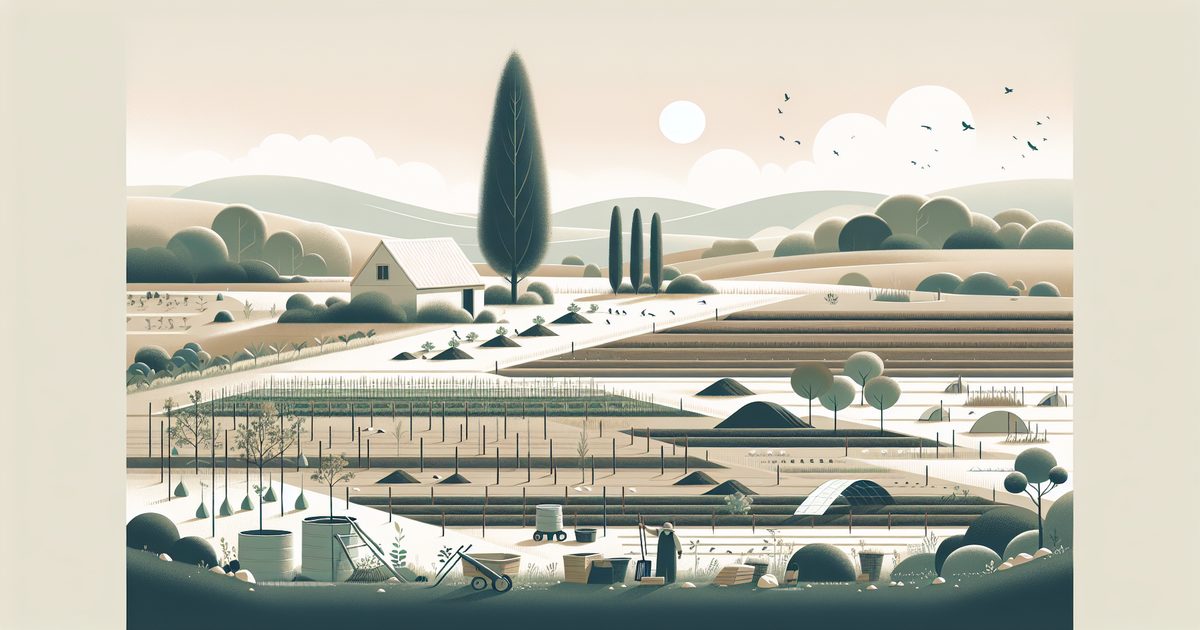
1. Beyond Gardening: Permaculture as a Systems Science
Permaculture (Permanent Agriculture) is often mistaken for a gardening technique. In reality, it is a design science rooted in the observation of natural ecosystems. While industrial agriculture focuses on individual "components" (the crop, the pest, the fertilizer), permaculture focuses on the relationships between those components.
The Three Ethics of Restoration
At the core of every permaculture project are three non-negotiable ethics that act as the biological "North Star":
- Earth Care: Restoring the soil, the forests, and the water. If the Earth isn't healing, the design is a failure.
- People Care: Ensuring that humans have access to the resources they need to thrive, reducing the "survival stress" that leads to ecological destruction.
- Fair Share: Reinvesting the surplus back into the first two ethics. Nature is inherently abundant; permaculture simply manages that abundance for the benefit of all kin.
2. The Restoration Toolkit: Principles in Action
To restore a degraded piece of land—whether it is a backyard or a 100-acre farm—we use a set of 12 Design Principles. In 2026, these have been refined through data-backed "Regenerative Design" software to maximize efficiency.
Principle 1: Observe and Interact
Before you move a single stone, you must spend a full cycle of seasons observing the land. Where does the water flow? Where does the frost linger?
The Goal: To work with the energy of the site rather than against it. By placing a pond where the water already naturally pools, you save thousands of hours of future maintenance.
Principle 2: Catch and Store Energy
Sunlight, wind, and rain are all packets of energy that move through a site. A restored landscape acts as a "biological battery."
The Method: Using Swales (on-contour trenches) to "catch" rainwater and sink it into the ground, rather than letting it run off and cause erosion. This recharges the local aquifer and creates "subsurface reservoirs" for plants during the dry season.
Principle 3: Design from Patterns to Details
Nature works in patterns—spirals, networks, and branching structures. By using Zoning, we organize the land based on the frequency of human interaction.
Zone 0: The home (the heart of the system).
Zone 1: High-maintenance needs (kitchen herbs, daily-use plants).
Zone 5: The wild (untouched wilderness that provides the "seed bank" and biological wisdom for the rest of the site).
🕒 Pause & Reflect
Think about the way you move through your own home or neighborhood. Is it a path of "least resistance," or are you constantly bumping into obstacles? Now, imagine a garden designed specifically for you and the Earth to thrive together—where the fruit falls right where you walk, and the rain waters the plants for you. How does it feel to realize that abundance is a design choice, not a lucky accident?
Love In Action
1. Pause & Reflect
Place your hand on a wall or a floor in your home. Realize that this structure is "Zone 0"—the center of your personal ecosystem. Take a deep breath and acknowledge that you have the agency to design your life for connection. You are not a consumer; you are a steward.
2. ⚡ 60-Second Micro-Act: The Observation Anchor
Step outside and find one "edge" in your environment—where the grass meets the pavement, or where the sun meets the shade. Watch that edge for 60 seconds.
The Science: "Edges" are the most biologically productive areas in any ecosystem (the Edge Effect). By observing them, you are training your brain to see where life is most active and where restoration is most needed.
3. The Village Map (Permaculture Kin)
Permaculture Institute: A global hub for education, certification, and project mapping.
Permaculture Association (UK): One of the world's leading organizations for research into the social and ecological impacts of permaculture.
Appropedia: A wiki for sustainable development and permaculture solutions.
4. The Kindness Mirror
A beautiful overhead drone shot of a dry, brown valley. A permaculture designer draws "swales" on a map. The camera shifts to real life: the swales are dug, and trees are planted on the ridges. Fast-forward through the rain: the swales fill with water, the desert turns green, and a small, vibrant food forest emerges. A human child picks a piece of fruit and shares it with a neighbor. The land is no longer "worked"; it is flourishing.
Take Action Today
Action Protocol
Ecological restoration begins with a single, deliberate action. By integrating permaculture principles into daily life, individuals can contribute to significant environmental regeneration and foster resilient ecosystems.
Immediate Impact: 1 Minute
Observe your immediate outdoor space for 60 seconds. Identify one area of bare soil larger than 1 square foot, or a patch of monoculture lawn. This simple act initiates a shift in perspective, revealing opportunities for micro-restoration and fostering a deeper connection to your local ecology. Consider where rainwater flows and where it could be slowed or absorbed.
Weekend Restoration: 1 Hour
Dedicate one hour this weekend to establishing a "pollinator patch" using native plants. This project enhances local biodiversity and supports essential ecosystem services.
Project: 3x3 Foot Pollinator Patch
- Site Preparation (15 minutes): Clear a 3x3 foot area of weeds. Loosen the top 6 inches of soil.
- Soil Amendment (10 minutes): Incorporate 1 cubic foot of organic compost into the soil.
- Planting (20 minutes): Plant 3-5 native perennial flowering plants known to attract pollinators (e.g., coneflower, milkweed, bee balm). Space them 12-18 inches apart.
- Mulching & Watering (15 minutes): Apply a 2-inch layer of wood chip mulch around plants. Water thoroughly with 1 gallon of water.
| Item | Quantity | Estimated Cost |
|---|
| Native Perennial Plants | 3-5 | $30 - $50 |
| Organic Compost | 1 cubic foot | $5 - $10 |
| Wood Chip Mulch | 1 bag | $5 - $8 |
| Total Investment | $40 - $68 |
Transformative Commitment: 1 Day
Design and begin implementing a small-scale rainwater harvesting system, such as a rain barrel connected to a downspout. This project can significantly reduce municipal water usage and mitigate stormwater runoff.
Project: 50-Gallon Rain Barrel Installation
- Site Selection & Preparation (2 hours): Choose a downspout near a garden bed. Ensure the ground is level and stable for the rain barrel.
- Gutter Modification (3 hours): Cut the downspout and install a diverter kit, directing water into the rain barrel.
- Barrel Placement & Connection (2 hours): Position the 50-gallon rain barrel, connect the diverter, and ensure overflow is directed away from the foundation.
- First Fill & Observation (1 hour): Wait for the next rainfall to observe the system in action. A 50-gallon barrel can fill from a 1,000 sq ft roof with just 0.08 inches of rain.
Expected Outcome: A single 50-gallon rain barrel can capture up to 1,500 gallons of water annually from an average roof, reducing potable water use for irrigation by up to 30% for a small garden.
Shareable Insight
A single mature oak tree can absorb over 10,000 gallons of rainwater annually, reducing urban runoff by 70% and providing habitat for hundreds of species.
Next Steps for Deeper Engagement
Start today by observing your immediate environment for 60 seconds, identifying one area of bare soil. This simple act initiates a shift in perspective, revealing opportunities for restoration and fostering a deeper connection to your local ecology.
Explore how nature connection boosts well-being: The Biophilia Effect: How Nature Connection Boosts Well-being
Learn about community-building through shared spaces: Cultivating Community Resilience Through Shared Gardens