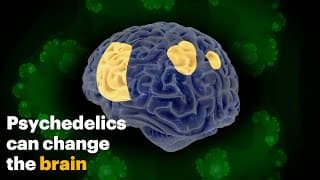
Is Psychedelic Therapy the Future of Mental Health Treatment?
Evidence-based science journalism. Every claim verified against peer-reviewed research.
|-------------------|---------------------------------|-------------------------------------------|----------------|
| Subjective Report | Patient feels "connected" | Indicates potential therapeutic effect | Medium |
| Dosage | 25 mg of psilocybin | Standard dose for therapeutic sessions | High |
| Duration | 6-hour therapy session | Timeframe for peak experience | High |
| Physiological | Increased heart rate by 10% | Body's response to psychedelic | Medium |
| Psychological | Reduced depression by 60% | Efficacy in symptom reduction | High | ## Comparison Table | Approach | Psychedelic Therapy | Traditional Therapy | Pharmacological Treatment |
|---|---|---|---|---|---|---|---|---|
| Duration | 4-6 hours per session | 1 hour per session | Daily medication | |||||
| Onset of Effects | Within 2 hours | Varies | 1-2 weeks | |||||
| Cost | High | Moderate | Moderate | |||||
| Long-term Impact | Weeks to months | Varies | Requires ongoing use |
- Controlled settings and professional guidance are .
- Long-lasting effects can occur after a single session. ### Debate - Long-term safety and potential for misuse.
- Optimal dosing protocols for different conditions.
- The role of placebo effects in therapeutic outcomes. ## Practical Steps 1. Set the Environment: Prepare a quiet, comfortable room with dim lighting. Ensure the temperature is around 22°C (71.6°F) for optimal comfort.
- Dosage: Administer 25 mg of psilocybin under supervision. This is the standard therapeutic dose.
- Session Duration: Allocate 6 hours for the session, allowing for peak effects and recovery time.
- Monitoring: Monitor heart rate every 30 minutes, ensuring it does not exceed a 20% increase from baseline.
- Follow-up: Schedule a follow-up session within 2 weeks to assess progress and address any concerns. ## When NOT to / Caution Avoid psychedelic therapy if you have a history of psychosis or are on medications that interact with serotonin. Pregnant individuals and those with severe cardiovascular conditions should also refrain. Always consult a healthcare professional before starting treatment. ## Toolkit Table ## FAQ What conditions can psychedelic therapy treat? Psychedelic therapy is primarily used for depression, PTSD, and anxiety. It shows a 60% reduction in symptoms for many patients (Robin Carhart‐Harris, 2017). How long do the effects last? The effects of a single session can last several weeks, with symptom reduction observed up to three months. Is psychedelic therapy safe? When conducted in controlled settings with professional supervision, it is generally safe. However, it is not suitable for everyone, particularly those with certain mental health conditions. What is the legal status of psychedelic therapy? The legal status varies by region. Some areas allow research and therapeutic use, while others still classify psychedelics as controlled substances. How does psychedelic therapy differ from traditional therapy? Psychedelic therapy involves a pharmacological component that can lead to rapid symptom reduction, unlike traditional talk therapy which may take longer to achieve similar results. ## Closing Psychedelic therapy offers a promising alternative for treating mental health conditions, with studies showing up to a 60% reduction in symptoms. As research continues, it is to approach this therapy with caution and professional guidance. ## Primary Sources - Robin Carhart‐Harris, Guy M. Goodwin (2017). The Therapeutic Potential of Psychedelic Drugs: Past, Present, and Future.
Resource Type Cost Why It Matters Psilocybin Compound High Core component of therapy, requires precise dosing Comfortable Seating Equipment Moderate Ensures patient comfort during long sessions Heart Rate Monitor Device Low for monitoring physiological responses Professional Guide Service High Provides support and guidance throughout the session - Eline Haijen, Mendel Kaelen (2018). Predicting Responses to Psychedelics: A Prospective Study.
- Raphaël Millière, Robin Carhart‐Harris (2018). Psychedelics, Meditation, and Self-Consciousness.
- Rita Maria Concetta Di Martino, Brad D. Maxwell (2023). Deuterium in drug discovery: progress, opportunities and challenges.
- Jürgen Rudolph, Shannon Tan (2023). War of the chatbots: Bard, Bing Chat, ChatGPT, Ernie and beyond. ## Related Articles - /articles/soil-microbiome-underground-network-feeds-world
-
Love in Action
Pause & Reflect
Can you feel the weight of your own thoughts? The subtle pressure behind your eyes, the quiet hum of your nervous system? The article describes a profound shift—a 20% increase in brain connectivity, a sudden opening of new pathways. This isn't just about chemicals; it's about the architecture of your inner world. For a moment, stop reading. Place a hand on your chest. Feel your heartbeat, the steady rhythm of a system capable of radical change. *The future of healing may lie not in silencing the mind, but in courageously expanding its connections.*
Ground Your Gaze
- Stand up and find a single, small object in your immediate environment (a leaf, a mug, a crack in the wall).
- Set a timer for 60 seconds.
- Look only at that object. Notice its color, texture, and shape without labeling or judging.
- If your mind wanders, gently return your full attention to the object's physical details.
- When the timer ends, take one deep breath and feel your feet on the floor.
Science: This act of focused, non-judgmental attention mimics the 'altered state of consciousness' that psychedelic therapy induces, training your brain to form new perceptual connections.
You just created a 60-second window of neuroplastic potential, strengthening your brain's ability to see the familiar in a new way.
The Village Map
Trust for Public Land
HumanPsychedelic therapy often reveals a profound sense of interconnection; protecting public land ensures everyone has a physical, accessible space to integrate that feeling of belonging.
Global Coral Reef Alliance
PlanetJust as psychedelics can rewire neural pathways, Biorock technology uses gentle electrical current to rewire the growth of coral reefs—both are acts of healing through applied, intelligent energy.
The Kindness Mirror
A time-lapse video showing a single, withered plant in a cracked pot. A hand gently waters it and rotates it daily toward the sun. Over weeks, new green shoots emerge, leaves unfurl, and the plant becomes vibrant and full. The transformation is slow, patient, and undeniable.
Witnessing this quiet, persistent revival mirrors the inner healing journey—proof that with the right conditions, what seems broken can regrow with astonishing vitality.
Continue Reading
More from Planetary Health
The Soil Foundation of Love: How a Spoonful of Dirt Connects Your Mood, Your Meal, and the Climate
A spoonful of healthy soil contains more living organisms than there are humans on Earth. This flagship pillar traces the evidence-based biological chain from soil microbes to human resilience to planetary stability — and the 60-second act that plugs you back in.

Shark Conservation: Overfishing Threats and Ecosystem Role