Why Won't My Seeds Germinate? The Soil Temperature Problem Nobody Checks
Evidence-based science journalism. Every claim verified against peer-reviewed research.
seedstartingtemperaturegermination
Evidence-based science journalism. Every claim verified against peer-reviewed research.
The germination of seeds is highly sensitive to soil temperature. For warm-season crops like tomatoes, germination rates plummet from 95% at 85°F to under 10% at 55°F. This is because enzyme activity, for seed germination, drops in cooler temperatures. ## What Is the Soil Temperature Problem?
Soil temperature controls the rate of enzyme activation inside the seed. Below 50°F (10°C), warm-season crop seeds cannot mobilize stored reserves — germination stops entirely regardless of moisture (Bewley et al., 2013). Above the optimum, some cool-season crops enter thermodormancy: lettuce germination drops to near zero above 77°F (Harrington & Minges, 1954). The practical problem is that soil temperature lags air temperature by 2-4 weeks in spring (USDA-NRCS, 2012), so a week of warm weather does not mean warm soil. Measure at 2-inch depth for small seeds, 4-inch depth for large seeds. ## Observation vs Measurement
| Category | Example | What It Tells You | Confidence | ||||
|---|---|---|---|---|---|---|---|
| Visual Check | Seedlings not sprouting | Possible temperature issue | Medium | ||||
| Soil Thermometer | Soil temperature at 55°F | Confirms suboptimal conditions for tomatoes | High | ||||
| Germination Rate | 10% germination observed | Indicates temperature below optimal | High | ||||
| Seed Packet Info | "7-14 days" germination time | Expected timeline under optimal conditions | Medium | ||||
| Soil Type | Heavy, wet soil | Increased risk of seed rot | High | ## Comparison of Approaches | Approach | Pros | Cons |
| --------------------- | ---------------------------------------- | ---------------------------------------- | |||||
| Use Soil Thermometer | Accurate temperature measurement | Requires purchase and monitoring | |||||
| Rely on Seed Packet | Easy and convenient | May not account for local conditions | |||||
| Trial and Error | Personalized experience | Time-consuming and potentially wasteful | |||||
| Consult Local Experts | Tailored advice | May not be readily available |
Germination speed rises or collapses with soil temperature, which governs three phases: imbibition, enzyme activation, and radicle emergence. For warm-season crops, the base temperature is typically 50°F. Below this threshold, the enzymes responsible for mobilizing stored reserves become inactive, halting germination. This is why soil temperature is ; it directly influences the metabolic processes that drive germination (Copeland & McDonald, 2001). ### The Impact of Cold Soil on Seed Health
Soils below 60°F slow germination and raise seed rot incidence by 3-5x, especially in cold, heavy, wet conditions. Fungal pathogens like Pythium and Rhizoctonia in cold, wet conditions, attacking seeds before they can germinate. According to Copeland and McDonald (2001), seed rot incidents increase three to five times below 60°F, particularly in heavy soils. This makes understanding and monitoring soil temperature for successful seed germination. ## What the Research Shows - Harrington & Minges (1954): Found that tomato seeds have an optimal germination temperature of 80-85°F, with a germination rate of 95% in 6 days. At 60°F, the rate drops to 50% over 14 days, and below 50°F, it plummets to under 10%. - Copeland & McDonald (2001): Highlighted that seed imbibition is temperature-dependent, with enzyme activity dropping by 50% for every 10°C decrease. Cold, wet soils increase seed rot due to faster fungal pathogen attacks. - Bewley et al. (2013): Described germination as a three-phase process, each with a temperature minimum. For warm-season crops, germination stops entirely below 50°F, regardless of moisture. - Maynard & Hochmuth (2007): Provided soil temperature ranges for common vegetables, emphasizing the importance of optimal temperatures for successful germination. ## What Scientists Agree On — and What Remains Debated Agreements:
| Resource | Type | Cost | Why It Matters |
|---|---|---|---|
| Soil Thermometer | Tool | $10-20 | Provides accurate soil temperature readings |
| Raised Bed Materials | Gardening | Varies | Helps maintain optimal soil temperature |
| Mulch | Gardening | $5-15 | Insulates soil, maintaining temperature |
| Local Extension Service | Advice | Free | Offers localized planting advice |
-
Germination speed rises or collapses with soil temperature, which governs three phases: imbibition, enzyme activation, and radicle emergence. For warm-season crops, the base temperature is typically 50°F. Below this threshold, the enzymes responsible for mobilizing stored reserves become inactive, halting germination. This is why soil temperature is ; it directly influences the metabolic processes that drive germination (Copeland & McDonald, 2001). ### The Impact of Cold Soil on Seed Health
Soils below 60°F slow germination and raise seed rot incidence by 3-5x, especially in cold, heavy, wet conditions. Fungal pathogens like Pythium and Rhizoctonia in cold, wet conditions, attacking seeds before they can germinate. According to Copeland and McDonald (2001), seed rot incidents increase three to five times below 60°F, particularly in heavy soils. This makes understanding and monitoring soil temperature for successful seed germination. ## What the Research Shows - Harrington & Minges (1954): Found that tomato seeds have an optimal germination temperature of 80-85°F, with a germination rate of 95% in 6 days. At 60°F, the rate drops to 50% over 14 days, and below 50°F, it plummets to under 10%. - Copeland & McDonald (2001): Highlighted that seed imbibition is temperature-dependent, with enzyme activity dropping by 50% for every 10°C decrease. Cold, wet soils increase seed rot due to faster fungal pathogen attacks. - Bewley et al. (2013): Described germination as a three-phase process, each with a temperature minimum. For warm-season crops, germination stops entirely below 50°F, regardless of moisture. - Maynard & Hochmuth (2007): Provided soil temperature ranges for common vegetables, emphasizing the importance of optimal temperatures for successful germination. ## What Scientists Agree On — and What Remains Debated Agreements:
| Resource | Type | Cost | Why It Matters |
|---|---|---|---|
| Soil Thermometer | Tool | $10-20 | Provides accurate soil temperature readings |
| Raised Bed Materials | Gardening | Varies | Helps maintain optimal soil temperature |
| Mulch | Gardening | $5-15 | Insulates soil, maintaining temperature |
| Local Extension Service | Advice | Free | Offers localized planting advice |
-
Why Your Seeds Aren't Germinating (and how to fix it!)

7 FATAL MISTAKES: Why Seeds Not Germinating or Sprouting?
What is Seed Priming?
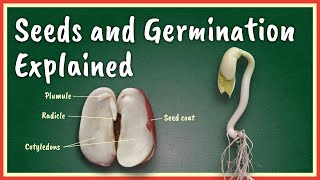
Seeds and Germination Explained
This New Method of Starting Seeds Will Change Your Life

Struggling With Seeds? This Fixes Everything!
Mini Split Heat Pump Heating System! Can It Work In Frigid Temperatures?
How to Grow Cilantro...And Stop It From BOLTING!
Can you feel the quiet, patient hum of your own body's warmth? The steady pulse in your wrist, the gentle heat of your own palm. Now, imagine a tiny seed, holding its entire future in a shell, waiting for that same kind of warmth from the earth. The science tells us that without the right temperature, its inner spark—the enzymes that unlock life—simply cannot fire. It's not dead, just waiting, suspended. Your breath, your heartbeat, are a constant reminder of the perfect, active warmth that life requires. *The most profound readiness is not just about waiting, but about creating the precise warmth that allows something to wake.*
Science: This tactile check mirrors the need to measure soil temperature, as it—not air temperature—controls the enzyme activity that triggers germination.
You will have a direct, somatic baseline for understanding if your soil is hospitable (warm) or dormant (cool) for the life it's meant to support.
Healthy, living soil regulates its own temperature and moisture, and this nonprofit teaches the regenerative practices that build that resilience from the ground up.
Just as precise warmth awakens a seed, precise electrical current provides the mineral 'warmth' that awakens and accelerates coral growth, healing another critical ecosystem.
A time-lapse video showing a gardener gently placing a soil thermometer into a seed tray, then cutting to the miraculous unfurling of dozens of tiny green seedlings days later, all set to the sound of a steady heartbeat. The visual story is one of patient, measured care yielding explosive life.
Witnessing the direct result of providing the right conditions transforms the act of measurement from a chore into a sacred act of midwifery.
More from Planetary Health

Composting temperature drives the biochemical breakdown of organic matter by accelerating microbial enzyme activity, such as cellulases and ligninases that target lignocellulosic biomass structures. In optimal ranges, typically 55-65°C, these temperatures enhance the activity of pathways like the tr...

- Mulch depth significantly affects soil temperature regulation.