
Heat, Hydration, and Pregnancy Risk in South Asian Cities: Low-Tech Protections
Evidence-based science journalism. Every claim verified against peer-reviewed research.
heatpregnancyhydrationsouth-asiamaternal-health
Evidence-based science journalism. Every claim verified against peer-reviewed research.
Heat exposure is a significant environmental stressor that adversely affects pregnancy outcomes. In BMC Medicine (2026 DOI 10.1186/s12916-026-04664-8), Fatima et al. analyzed 85,017 participants, revealing that low birth weight affected 18.72% of infants. The relative risks of low birth weight at the 99th percentile of temperature ranged from 1.47 to 1.91. This heat-related burden translated to a population attributable fraction of 9.39% to 13.15%, equating to approximately 1.24 million low-birth-weight cases over the study period (Fatima et al., 2026).
In a related study, Shankar et al. (2023) examined 126,273 pregnancies across three South Asian sites, including India and Pakistan. Their findings highlighted that second-trimester heat exposure was associated with preterm birth (RR 1.05 95% CI 1.02-1.07) and low birth weight (RR 1.02 95% CI 1.01-1.04). Additionally, third-trimester temperature exposure was linked to gestational hypertensive disease (RR 1.07 95% CI 1.02-1.12), with site-specific analysis in Thatta showing a first-trimester low-birth-weight association (Shankar et al., 2023).
The global context provided by Lakhoo et al. (2024) synthesized 198 studies from 66 countries, confirming that heat exposure increases the odds of preterm birth by 1.04 per 1°C rise and by 1.26 during heat waves. This review also reported higher odds of stillbirth (OR 1.13), congenital anomalies (OR 1.48), and gestational diabetes (OR 1.28) under high heat exposure (Lakhoo et al., 2024).
Across Pakistan linkage, South Asian registry sites, and the global umbrella synthesis, the pattern is consistent: risk scales with heat intensity and wave timing rather than subjective discomfort alone—setting up why physiologic and urban exposure pathways matter in the next section.
Actionable takeaway: When issuing heat warnings for antenatal cohorts, stratify guidance by trimester using the RR/OR magnitudes above (second-trimester preterm/LBW vs third-trimester hypertensive disease) instead of a single generic heat alert.
Pregnancy narrows the thermoregulatory margin, increasing vulnerability to heat stress. Understanding these physiological changes is essential for recognizing why pregnant women face heightened risks of heat-related complications. The cardiovascular system works diligently to support the developing fetus, and this increased demand can be further exacerbated by high temperatures. Here’s a detailed examination of these mechanisms:
Clinical read: The BMJ/IJGO pooled slopes and the registry trimester contrasts above imply that heat-risk messaging should differ between early–mid pregnancy (preterm/LBW sensitivity) and late pregnancy (hypertensive disease sensitivity)—community delivery tactics follow in the final section.
Strategically timing workloads is a vital intervention to mitigate heat exposure risks for pregnant women. Lusambili et al. (2025) demonstrated the effectiveness of this approach through a community-based intervention in Kenya. This initiative involved pregnant women, their families, and community influencers, focusing on altering daily schedules to minimize heat exposure, reducing heavy workloads, and promoting hydration.
Kadio et al. (2025) expanded upon these findings through a co-design study in Burkina Faso, involving community members and stakeholders. This study prioritized intervention feasibility, sustainability, and cost-effectiveness, operationalizing heat-protection messaging through educational group talks, consultation-room exchanges, and waiting-room video broadcasts.
Chersich et al. (2022) proposed a framework that includes workload reduction as a critical element. This framework supports the integration of low-resource response layers, such as water supplementation and heat-health monitoring, into maternal health strategies.
Actionable takeaway: This week, mirror the evaluated cadence from the cited pilots—weekly community health volunteer touchpoints through month four with a formal check-in at month five (Lusambili et al., 2025), plus dedicated antenatal slots for heat rules in group talks, consultation rooms, or waiting-room video (Kadio et al., 2025)—so workload timing is scheduled and auditable, not only advised in generic terms.

The Science of Sauna & Heat Exposure: Does It Really Work?

The Science Behind Heat Exposure: Health, Performance, and Recovery
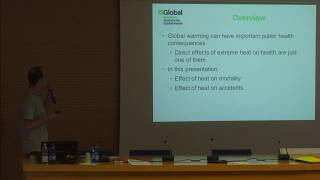
Extreme Heat Exposure and Health - Xavier Basagaña – EEPE

What Are the Best Choices for Getting Hydrated? | Educational Video | Layne Norton Phd

How pregnancy dramatically resculpts the brain - BBC REEL
The surprising effects of pregnancy

Cryptic Pregnancy: Signs, Risks & How it Happens

Crop Protection System|| Smart Farming Systems|| Laser Security System || Science Working Project
Can you feel the weight of the air on your skin, the slight prickle of sweat? Close your eyes and imagine that feeling amplified, your heart working harder, your body holding the delicate balance of another life within it. The science tells us this isn't just discomfort; it's a physiological narrowing of safety, where a few degrees can tip the scales for a pregnancy. This risk is carried in the body, not just the data. *Your capacity for care, right now, can be someone else's margin of safety.*
Science: This act honors the critical, life-sustaining role of hydration that becomes a primary low-tech defense against heat stress in pregnancy.
This simple, conscious act reinforces the bodily truth that clean water is not a given, but a foundational protection for maternal health.
Systemic heat risks are driven by environmental degradation, and supporting certified businesses directly funds vetted climate solutions that protect vulnerable communities.
Sustainable community-led practices, like those Rare fosters, build local resilience against climate impacts, including extreme heat that threatens maternal and child health.
A viewer would see a simple, community-led scene: volunteers in a South Asian neighborhood setting up a shaded station with large clay pots (matkas) of cool water, offering it freely to pregnant women and passersby during a heatwave. The focus is on the gentle, respectful act of offering and receiving.
Witnessing this direct, human-scale provision of a basic need transforms the abstract risk of heat into a tangible act of collective care.
More from Human Health

The Gut-Brain Axis (GBA) is a complex, bidirectional communication system that links the central nervous system with the enteric nervous system, integra...
Cold exposure activates brown adipose tissue (BAT) through mechanisms like norepinephrine-induced β3-adrenergic receptor signaling, which boosts thermog...

The Vagus Nerve and Cold Exposure: How Ice Baths Rewire Your Stress Response - Key insight: Modern life traps the nervous system in chronic stress by pr